Tuesday, 15 October 2013

Unit 4 communication through Art and Design


Illustrator tasks


Typeface expression


Type face expression


------------------------------------------------------------------------
 -----------------------------------------------------------------
-------------------------------------------------------------------

----------------------------------------------------------------

--------------------------------------------------------------------------


haiku development


haiku final products

-------------------------------------------------------------------------------


--------------------------------------------------------------------------------


------------------------------------------------------------------------------


development of ideas


final digital product


Tuesday, 1 October 2013

Unit 53 2d animation

Unit 53 2d animation

Research


The whole idea of animation spans across many thousands of years, possibly even dating back to to the old caveman drawings where images were used to tell a story it was only untill the 1800's where we began to strive deeper into the world of animation.

1824- The starting date of animation or rather the birth of the idea for fully developing it.

1832- phenakistoscope was invented.

joseph plateue a belgian physicist and his sons introduced the phenakistoscope, uses the persistence of motion to create the motion illusion.


My own impressions of this were at first i thought the general choices of objects that were animated strange and somewhat creepy, this could be to the fact that the images used are out of my time and culture was different back in the time dated plus coming from other countries not native to me.

1834- First invented by william horner of england

initially named the "daedalum" which essentially meant the devils wheel (possibly seen to have magical properties, although it was just an illusion?). only truly started becoming popular around the 1860's where it was later developed by an american, william F lincoln and he named the device the "zoetrope" which means the wheel of life (animation giving the sense of that).


working differently to the phenakistscope by instead having the images placed on the inside of a vertical cyclinder and the slits themselves become the viewing window rather than being a technical modification around the images like with the phenakistoscope.

Later developments- 3d zoetrope

towards the end of the 20 th century such company's like pixar, disney created an adaptation of the zoetrope in the sense that instead of using simple flat images they attempted to use 3d models and apply the same effect as the zoetrope by having the models (of different movement stages) spun on a circular plate, with a flicker or strobe effect to apply a framerate. see below.


1895- Thomas Edison invents the kinetoscope for early motion films

Worked by taking a vast collection of tiny images which showed a gradual movement of positions of objects when in sequence. edison attached these images around a cyclinder (whilst adding the slots between images to give it a frame rate) when spun the images would appear to be in motion, giving the birth of early motion films.


Different from the phenakistoscope in the way that the images used are instead taken of real images rather than a cartoon.

1908- Emile cohl's fantasmagorie

Going from early film animation to early animation in the cartoon or caricature sense (traditionally seen more as animation). Emile cohl's fantasmoragie, you could say that this was essentially the birth into motion cartoon,serving as a bases for inspiration.


1934- Betty Boop Ha, Ha, Ha 

here is a betty boop episode and an example of a development of early animation from emile rohl's fantasmagorie.


at this moment in animation boundaries were really being pushed boundaries essentially meaning the edge of the page. where the world of cartoon was beginning to be bridged over to the real world by having animated frames lead off the main staging ground and actually (seem to) interact with the real world around.
this could possibly be also seen as the early stages for augmented reality.

1970-2000's- Flip books

Flip books work by having several images drawn onto a notepad and proceed to run your thumb across the opposite end of the binding, the transition between pages being flicked through introduced frame rate hence forth giving the illusion of motion and the graphic to animate.


This particular flickbook animation stood out to me because it wasnt based solely around one scene, there arr many different scenes that transiotion to eachother throughout, all with changing perspective and angles. something ive not typically seen from any other flip book, where its usually the simple animated stickman set up.

1990 - wallace and gromitt's grand day out was created

A possible adaptation of the 3d zoe trope, claymation was introduced and widely became more famous around the the birth of the series wallace and gromitt and was thus beginning a new/alternate course in the progression/adaptation of animation.


claymation was a very laborious process much more so than that of hand drawn cel animation, it worked by photographs taken of different clay character models all at different stages of movement and when played in sequence at a very fast rate it would give our eyes an animated illusion of the clay models.
and to get an idea on how laborious it would take 12 changes to a models movement just to achieve a second of animation. and 64,800 changes for a full feature film.


1995 - Dawn of the cgi animation

Following on from claymation, animation began to take more of a prominent turn to into 3d animation and around this time computers were seen more and more as a useful an animation tool, untill the widely famous animated film "toy story" was released by pixar and was seen as the first and most detailed cg animation to date and began a new era for animation. from then on the computer became the only tool animators used to create and drawings only used for concepts.


a classic and a prominent stamp on the timeline of history of animation, and for quite some time put pixar as the animation powerhouse since other companies were lacking in the technology to achieve such a level as toy story.

Development of cgi
however once tech caught up all around, cg animation was everywhere and continually was developed in terms of detail, smoothness, so much so to the point of cg animation reaching a level/quality of realism, a clip from the film "final fantasy 7 advent children" is an example of that.


As you can see cg animation has come along way from the true essential birth of it with toy story, in terms of overall smoothness and detail specifically within the hair an texture in the backgrounds.


Monday, 23 September 2013

Unit 1 visual recording

My Saul bass research

Scouring the net i have found these 6 inspired saul bass themed movie posters.
As you can see the overall them/style judging from the lines, shapes and tone its very simplistic and to the point giving clear understanding which was always one of saul bass's goals. 


Here i have attempted my own saul bass inspired movie posters by looking at the previous research of secondary resources of saul bass movie posters, and tried to capture the retro-minamilist style you see below.

Font research


A collection of letters designed as a saul bass inspired typeface, looking over various type faces across the net that fit the saul bass theme, i have created my own version of a handmade/cut out typeface (which spells out napoleon dynamite)


Animated title sequence
Napoleon dynamite
Moodboards

These food products appear alot within the napoleon dynamite film although some may not appear as often as others they hold some attachment to an iconic/memorable scene in the film. 


Colours here are the main collection derived from the main characters themselves more than anything, so for instance the brown would associate to napoleons brown suit in the prom. this helps me give an overall colour scheme to follow when creating my finished title sequence.


Again more iconic items that stand out among others within the film, the objects themselves gives me stuff to work with for shapes to create within flash.


Below ive compiled a variety of areas/surroundings of which the majority of the is film is situated and shot, also giving me ideas on what sort of scenery/background i can use for sequence.


Initial development of ideas


Mind map + Y chart


Thumbnail sketches


Although this collection of images shares no relevance with napoleon dynamite it still helped give me and idea on how to look at objects and apply visual metaphors to them to create something new e.g character, setting, enemy.


Development of initial ideas

for each of the images below i took an iconic item/object (from my mind map of ideas) and initially drew a rather detailed sketch of each chosen object. i then proceeded to work on simplifying each sketch to its basic shapes, helping me to get an idea of how to work with them in flash animation.


Tina the llama


Debs camera


Napoleon's (famous) brown suit


steak (everyone was eating it)


Swing ball (one of napoleons skills)


Napoleon's choice of refreshment


Storyboards

Initial draft


Final draft


Unit 3 art of the game

Task one - Gothic poster

Chosen game : Little big planet

Research


Artist : Harry clarke


for me horror is in the simple things, where it leaves the imagination to do most of the work and i found harry clarkes use of negative space to quite efective in adding that sense of mystery almost closed off environment by having that small patch of or pillar of white in the back surrounded by black like, giving a almost claustrophobic feel.


Artist : Tim burton


going for little big planet and the task of "gothifying" it i looked up art pieces produced by tim burton who seems to always try to capture a childlike object/scene and adds a dark tone by using simple colours usually only black and white and if there is colour it is dulled down, without vibrance "absence of life", also with imagery used e.g here we have withered away trees and blackened eyes giving that sense of weakness or being vulnerable to everything around.


Development sketches


Final product


In the final development of the gothic poster i decided to lean towards more the retro minimalist art style or known as saul bass because of its clear and simple qualities, plus the absence of detail and minimal colours can add quite a dark almost scary feel because of the details are unknown to us and lets our imaginations run.


Task two - Redesign a popular game character


Chosen character: Altair lbn-La'Ahad


Research

Movement: Cubism


i find out of all the artistic movements out there cubism could relate quite closely to the assassin creed style e.g environment of the old religious cities and general placement in history. Relating by the use of abstract shapes and colours, for example the architecture of old was poorly built and was almost always shown to have bends and curves, like the building had been warped slightly appealing to the nature of cubism. 


juan gris "violin and glass"


here the example is of the use of colour and how it radiates with warmth with hot colours e.g reds, oranges and assasins creed chosen environment fits this description, with the orange golden sand that surrounded.
can also so pair the use of red with the royalty banners that would usually line the streets and of course as a highlight the main antagonist "altair".


 george braque "violin and pitcher"

The example here is to show the clear cut abstract shapes which back then can relate to the quirky buildings of old within the assassins creed environment, abstract in the way that they seemed to be warped or slightly twisted from years of weathering and bad maintenance  why all the abstract buildings were mainly situated in the poorer districts.

Movement: Futurism


Natalia sergneeva "The cyclist"


developing on from the cubist art movement futurism can relate to the character in the way how each painting has an "energy" or movement to it, matching the fast paced aspect of altair in the game.


luigi rossolo "The revolt"


with this image, mainly looked at how other artists have layed out or structured buildings within their work for simple inspiration in how i could possibly apply a background of structures behind the main subject of altair in front.


Development sketches


Final product


Task three-develop an original game character

Research

Development sketches

Final product

Task four-develop an original game level

Research

Development sketches

Final product

Task five-develop an original game environment

Chosen game environment: underwater city


Research

 Artist : scott sinclair


this city environment is taken from the game bioshock an underwater city deep below the surface, from a glance would look like a city above ground, but with the additions like that murky blur and the light beams shining through the water plus the skybridges/tunnels are key factors in trying to achieve a city view  that appears to be underwater.


Artist : Jason decaires taylor


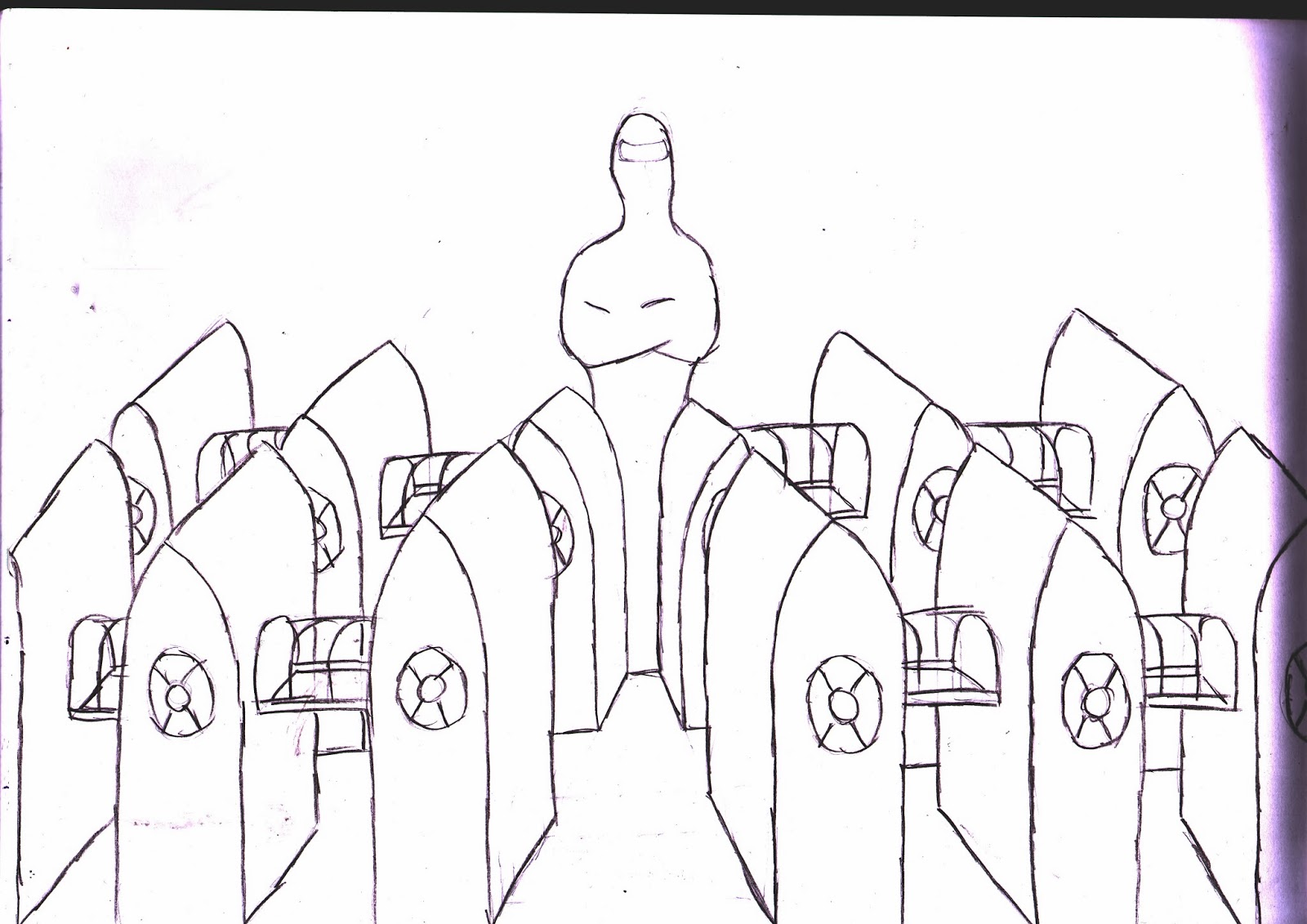
these images are of underwater sculptures produced by the artist jason taylor, these humanoid statues stood out to me because i thought on a mass scale would make a great underwater city basis by having the human structure as like a form of temple because for a start an underwater city is a unique concept so the idea of a giant underwater human statue signifies that independence from the rest.

Artist : phuan quoc


From the vintage style of rapture in bioshock i decided to look for a more futuristic feel in city design, in this example this is very much a cyber punk inspired environment  i think (in my opinion) that a futuristic look suits an underwater city much much more than a vintage style because it makes it more believable for you can see they would have the technology to even create and support this underwater structure. also having a look at underwater transportation being inspired by oceanic animals e.g whales, also adding to the underwater feel and that sense of adaptation which is a natural human instinct.


Development sketches


Final product